With the return of Jamie Hoffmann to the Dodgers on Monday, the waiving of Chad Gaudin today, and the now daily reassignments to minor league camp, the Yankees Opening Day roster is easily predictable at this point. Barring any injuries or an unexpected trade, these are the guys we can expect to see on the third baseline in Boston on Easter night.
Starting Rotation (5) CC Sabathia A.J. Burnett Andy Pettitte Javier Vazquez Winner of The Most Important Fifth Starter Competition in History
Bullpen (7) Mariano Rivera Chan Ho Park David Robertson Damaso Marte Alfredo Aceves Sergio Mitre Runner-Up of The Most Important Fifth Starter Competition in History
Catchers (2) Jorge Posada Francisco Cervelli
Infielders (6) Mark Teixeira Robinson Cano Derek Jeter Alex Rodriguez Nick Johnson Ramiro Pena
Outfielders (5) Nick Swisher Curtis Granderson Brett Gardner Randy Winn Marcus Thames
Ostensibly, Pena and Kevin Russo are still competing for the utility infielder spot, but I don't see Russo being able to usurp the incumbent. Outfielders Jon Weber, Greg Golson, and David Winfree are still in Big League camp, but none seem to fit the profile of what the team is looking for from the final outfield spot: Weber is left handed, Golson is speed/defense guy with a poor bat, and Winfree has no Major League experience and less than 500 PA above AA.
I don't suppose Mitre is guaranteed a job, and Mark Melancon and Jonathan Albaladejo are still around, but the club appears to be impressed with Mitre's strong spring, he has a track record with Joe Girardi, and his presence as the long man will allow the club to use Alfredo Aceves in more critical relief roles. I'd rather see Gaudin than Mitre in the long man role, but I am curious to see how Mitre's sinker plays out of the pen.
According to Ed Price of Fanhouse, Chad Gaudin was placed on waivers last night. Price further tweets that the waivers are outright waivers, making them irrevocable and meaning the Yankees cannot pull Gaudin back if another team claims him.
This leaves Gaudin with a few potential fates: he gets claimed by another team who assumes the entirety of his $2.95M salary; he clears and the Yankees outright him to the minors, remaining responsible for his contract; if Gaudin, has been outrighted before, he has the option to refuse the assignment and forfeit all but 25% of his contract; or he clears and the Yankees release him outright, owing him 25% of his contract.
Gaudin is a capable pitcher, so I'm assuming someone will claim him. FanGraphs' fan projections for 2010 have Gaudin at 0.8 WAR, which would be worth $3.6M on the open market. He's averaged 1.5 WAR over the last three seasons, good for approximately $6.75M on the open market. By those standards, he's a worthwhile pitcher at $2.95M.
Much like yesterday's return of Jamie Hoffmann, I'm a little bit surprised and somewhat disappointed by this move. Gaudin was essentially competing with Sergio Mitre for the longman/sixth or seventh starter position on the roster. While Mitre has been the better pitcher this spring, Gaudin is younger, has the better track record, has been effective in the AL in the past, and has shown himself to be serviceable both out of the pen and at the back of the rotation. Every available projection system predicts Gaudin as the better pitcher this year. Perhaps their salaries figured into this decision; or perhaps this move is a precursor to a rumored trade to secure Hoffmann's rights.
The recent transactions with Hoffmann and Gaudin leave the Yankees with two open spots on their 40 man roster.
As consumers of sports writing, we are extremely lucky to be living during the Joe Posnanski era. At no other point during the history of athletic journalism has there been A) a professional sports writer willing to write thousands of words on top of their weekly quotas simply for the enjoyment of it and B) a way for the public to access those words for free. It's not just the volume at which he produces content, but Poz's posts are overflowing with interesting nuggets. To wit, here's a tangent that he went off on while talking about the Nationals' plan to start Stephen Strasburg in the minor leagues this year.
On the other hand — well, I haven’t thought out the following too deeply. But I do sometimes wonder if “not rushing top prospects” is kind of safe, conventional thinking, the same sort of safe, conventional thinking that causes football coaches to punt on fourth down and short. In other words, I sometimes wonder if people don’t rush great prospects like Strasburg because it SOUNDS safer rather than because it IS safer.
[...]
I do sometimes wonder if one way to think out of the box is to really push prospects, especially advanced prospects, much faster than teams are doing it now. Sure, every GM and scout around can tell you horror story after horror story about players who came up too soon and were ruined because of it. But we don’t really know if those players would have succeeded had they been treated more carefully … maybe they were just lacking the talent or the work ethic or whatever. We can't really know.
In between those two paragraphs, Posnanski gives the example of Bob Feller who, although he was thrust into the Majors at 17 years old and walked more than 6 batters per 9 innings during his first three seasons, eventually figured it out and went on to have a great career.
The transition from the minor leagues into the Majors is one of the more delicate dances performed in sports, in both directions. So the sayings go, you don't want to bring a guy up "before he's ready" and you don't want to send a guy down when he has "nothing left to prove". Of course, the decisions are clouded with enormous amounts of luck. We've seen marginal players burst onto the scene and future Hall of Famers stumble out of the gate (there are some managers mixed in to that list, but you get the idea).
Look at Ramiro Pena and Francisco Cervelli, neither of whom had played above AA before getting called up to the Yankees. Neither of them hit the cover off the ball with the MLB team, but they made representative efforts at the plate (Pena actually improved on his minor league numbers) and shined defensively. These are just anecdotal examples with small sample sizes, but it goes to show that calling up a player "too early" isn't necessarily destined to fail.
In other sports and at other times in life, we are told that we benefit from increased competition. Perhaps we are put on a project at our job that pushes the boundaries of what we thought we were capable of and do some of our best work on it. Personally, I tend to play better golf when I'm paired with three other guys who shoot in the 70's than when I'm out with a few of my buddies who only break 100 on a good day. Does your performance on the basketball court improve when facing better competition? Again, not perfect examples, but just some things to consider.
The problem is that there are no alternative universes in which we can test these theories. You either go with Plan A or Plan B and get judged by the results. You don't have multiple Joba Chamberlains, one of which you could have kept in AAA to work on his starting repertoire in 2007 and 2008 and the other you could have brought up to the Major League bullpen to help the team in '07.
No team wants to squander a top prospect by doing something that is perceived as risky like rushing him to the Majors. Oh, they'll risk putting him on the wrong path by doing something seemingly conservative like stashing him in the minors for too long, but that's a whole different story.
I think this line of decision making has become de rigueur in sports. Whether it truly makes sense or not, PR plays a large role in many of the decisions that a franchise makes. It's one thing to be wrong when your decisions agree with conventional wisdom, it's an entirely different beast to roll snake eyes when you are bucking the established trends.
The example Posnanski uses about punting on 4th and short is a great one. Coaches are willing to be slightly wrong all of the time instead of being really wrong once in a while and getting lambasted like Bill Belichick did when he went for it on 4th and 2 and failed.
As decision making in sports becomes more and more grounded in logic and analysis, teams have to look to get an edge by finding the places that conventional wisdom might not be correct. Or places that it's generally correct but can be unnecessarily cautious at times in the name of saving face.
Maybe Sky Kalkman's unconventional line up really is better than the usual ones we are used to seeing, but if Joe Girardi trots it out for the first week of the season and the Yanks score three runs a game, he's going to be tarred and feathered by the media. If that happens with a typical batting order, (most sane) people would just chalk it up to bad luck. It would be kind of stupid for Girardi to stick his neck out that far simply on a self-preservation level.
Sure, there are plenty of factors that might keep a great prospect in the minors, like the cost of starting their arbitration clock and finding the right place for them on the team, but I agree with Poz's hunch that teams might be wasting some quality production in the minors by being too conservative with the timing of their call ups. Maybe that seemingly premature call up is a springboard to a better career. Perhaps it ends in failure, frustration and a demotion back to AAA. But there's only one way to find out.
Earlier today, Rule 5 pick Jamie Hoffmann cleared waivers and was returned to the Dodgers. The Dodgers will pay $25,000 for Hoffmann's return, half the initial price the Yankees paid for the pick. Hoffmann hit .130/.259/.174 in 26 plate appearances this spring. He drew three walks against one strike out and was one for two in stolen base attempts.
Barring an Elijah Dukes signing, it appears that Marcus Thames has won the fifth outfielder competition, despite his equally anemic .107/.167/.107 line in 29 plate appearances this spring and poor play in the field. Setting aside the useless, small sample size stats of the spring, it appears that the club values Thames' right handed power more than Hoffmann's versatility, defense, and speed. Thames may only do one thing well, but apparently that's the one thing the club is seeking from this spot. The team is lacking in right handed power from left field and the bench, but have players with skill sets similar to Hoffmann's in Brett Gardner and Randy Winn.
Speculation abounds that the Yankees may make a trade with Los Angeles, potentially sending an extraneous fifth starter candidate/longman such as Chad Gaudin or Sergio Mitre, to secure Hoffmann's rights. This would slightly reduce payroll and would free the Yankees from carrying Hoffmann under Rule 5 obligations, giving them the flexibility to stash him at AAA rather than carry him on the Major League roster all year. If that were to happen, it would create quite a log jam in the Scranton outfield with Hoffmann, Colin Curtis, Greg Golson, Reid Gorecki, Jon Weber, and David Winfree, though Hoffmann figures to be of more value than the rest of them.
On the flip side, such a deal would also mean that the Yankees had to trade two Major League pitchers - Brian Bruney and whoever goes west - in order to obtain a AAA outfielder. None of those pitchers should be considered a major loss, but I'd like to think that for the price of two Major League caliber pitchers the team could at least secure a fifth outfielder in whom they are confident.
In the end, it doesn't appear the pick has worked out well for the Yankees. The Rule 5 Draft isn't designed for teams like the Yankees and it was unlikely from the start that they'd obtain anyone of value from the pick. For every Johan Santata, Joakim Soria, or Shane Victorino that gets selected in the Rule 5, there are hundreds of Jamie Hoffmanns and the like who don't pan out. Still, Brian Cashman executed a shrewd trade with the Nationals to secure the top pick in the draft. It's unfortunate they weren't able to find a usable part with the pick of the litter.
Here are a few items of note, mostly from over the weekend:
A rainout down in Florida forced the Yankees to schedule an intrasquad game today to ensure that all their pitchers stayed on their respective schedules.
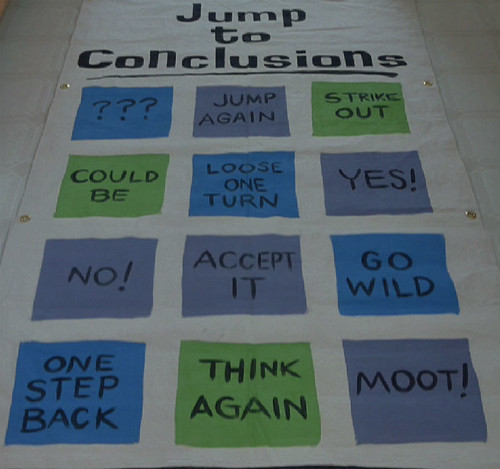
Hearing that, Jon Heyman busted out his jump to conclusions mat and declared that since Joba Chamerlain was not playing against the Phillies in Clearwater that he was no longer in the race to be fifth starter and can take his rightful place in the bullpen. (/rolls eyes and makes wanking motion)
Where does Joba belong? The chronically uninformed and impatient contingents of the interwebz have spoken loud and clear.
Chad Jennings profiled Ace in the Journal News on Sunday.
While the primary topic of the Yanks' Spring Training continues to focus on who will be the 5th starter, Marc Hulet at FanGraphs contends that the role is something of a myth. He instead suggests a three-headed approach to soaking up the last 25 or so starts the top four members of the rotation don't make.
Mark Teixeira (somewhat understandably) doesn't understand why UZR categorizes him as a below average first baseman. Joe Pawlikowski explains what UZR might be missing, to which I will add the fact that the metric totally disregards infield line drives which go a long way between determining which first baseman are good and which aren't. Joe also leaves open the possibility that we are giving Teix a little too much credit.
Marc Carig has a video interview with Phil Hughes wherein Phil demonstrates and discusses the different grips he uses for this 4-seamer, cutter, curve and change.
Because I wore several hats, I probably had a greater appreciation for all the different roles. I knew what it was to be a player, to be a prospect, how difficult it was being a prospect and going through the different levels of the minor leagues, what goes through a player’s mind. As an area scout, how difficult and lonely a job that is... You feel like you’re kind of off there on your own, especially when I was doing it. There wasn’t cell phones, there wasn’t computers, there wasn’t voice mail. You were really kind of a nomad out there trying to find players.
If plan on visiting Citizen's Bank Park anytime soon, you might want to vote for their signature hot dog. My vote would certainly be for the The South Philly, which is "all-beef and topped with broccoli rabe, spicy roasted peppers, and sharp provolone on an Italian roll". They had me at "broccoli rabe".
Good morning, Fackers. Hopefully everyone had a good weekend. Between the beautiful weather in the Northeast and the great NCAA tournament action, you'd need a pretty serious excuse to not have had a good past couple of days.
Although Albany's own Siena failed to upset Purdue and was bounced in the first round, Jason's alma mater Syracuse breezed through both UVM and Gonzaga on the way to the Sweet Sixteen. Surprisingly, they weren't the only school from New York to win their first two games with ease. In the same weekend that they won the ECAC championship in hockey, Cornell handily dismantled both Temple and Wisconsin, racking up 165 points along the way. Rumor has it that Andy Bernard has been on a three day bender.
The Big Red - and the bear on its logo that would surely be mauling the shit out of you if that giant "C" weren't holding him back - were one of 9 teams to pull off upsets in the first round (not counting 8 vs. 9 match ups) and join Nothern Iowa, St. Mary's and Washington as seeds in the bottom half of the tournament who have made their way into the round of 16.
It's not hard to understand why the NCAA tournament is so popular. There are a metric ton of things to like about it. The last four days have been jam packed with exciting roundballing action and brackets get people who aren't fans of college basketball or even sports in general moderately interested in the games. In general, CBS does a good job of switching to the best game on, so watching it is sort of like having the Red Zone channel. Sometimes you get lulls in the action or two good finishes happening at the same time, but it's extremely watchable even for someone who doesn't even have a dog in the fight.
On a deeper level though, my favorite part of the tournament are the upsets. With a few exceptions, I root for the team with the higher number next to their name. The assumption might be that Yankee fans wouldn't root for underdogs but that's not really how sports fandom works.
The tournament is the perfect showcase for Cinderella stories. In no other sport are there such clearly labeled #2 Goliath vs. #15 David match ups and there is something about human nature that makes us pull for the little guy. One of the most compelling things to watch in all of sports is a huge underdog try to weather an onslaught from the favorite in the closing minutes of a game with their respective season's hanging in the balance.
It was a pretty good weekend for underdogs in the MLB as well. The Twins (who aren't really a small market team, but act like one) signed Joe Mauer to an 8 year, $184M contract. He essentially got Mark Teixeira money but based on the gap between him and the next best catcher in the league (probably Jorge Posada at the moment), has the potential to be much more valuable. Even if he can't stay behind the plate for that whole time - which is pretty likely given that he'll be 35 when it expires - if he's still hitting anything like has over the past few years, his bat alone still might be worth $23M a year.
I'm honestly happy for the Twins and Mauer. The hometown boy gets a massive deal and the team locks up one of the very best players in baseball for a very long time. It's not without risk, but it was the right thing for both sides. The deal is good for the game of baseball as well. Between moving out of that shitty old Dome and locking up Mauer long term, the Twins franchise is shining pretty brightly coming into the 2010 season.
While part of my inner Yankee fan isn't exactly begging for more competition atop the AL and would have obviously enjoyed watching Mauer play everyday instead of 10 times a year, the other part knows baseball is a better game when franchises have identifiable superstars and play in nice buildings and that it made too much sense for the Twins not to make the ultimate commitment to the pride of St. Paul. Maybe the latter is the same part of me that likes to see St. Mary's take down Villanova.
Legend says that when George Washington was a boy, he chopped down a cherry tree. Papa Washington wasn't too happy to find a felled cherry tree on his land and when he asked little Georgie about it, our founding father sang like a canary. The moral of the legend is that George Washington couldn't tell a lie.
Ron Washington, on the other hand, can tell a lie. At least I think so. Because I can't conceive of a remotely plausible scenario in which a fifty seven year old man decides to try cocaine for the first time in his life. And, according to Washington's explanation, that's exactly what happened last year, leading to his much ballyhooed positive test.
Yet, as Craig Calcaterra pointed out earlier this week, Major League Baseball had a very extensive cocaine problem in the late seventies and early eighties, with the Kansas City Royals being one of the most deeply involved teams. Washington came up through the Royals system in the early seventies. This doesn't make Washington guilty by association, but it does make it very likely that he faced far greater access and temptations during his impressionable youth than he did as grizzled baseball lifer some time last year.
Virtually every Washington story that's filtered through my Google Reader over the past several days has centered on the question of how big of a deal is this? Unscientifically, the majority of what I've read (or my memory of it at least) posits that it's not a very big deal.
I don't want to play the morality police here, but I think this kind of is a big deal. Yes, Washington is a grown man. Yes, he is more than free to make his own decisions. But decisions have consequences, and right or wrong, Washington's decision was in violation of the law and was in violation of his contract with his employer. If I'm Nolan Ryan or Jon Daniels, I'd want to think long and hard about whether Ron Washington is the guy I want running my team.
That isn't to say that Washington doesn't deserve a second chance or that what he did was terribly wrong in the first place. But as I said above, I'm having a hard time believing that this was one time incident. If Washington endeavors to take a risk like that from time to time, I don't know that I want him calling the shots for my club. Managers have very little impact on what happens between the lines anyway, so unless Washington is some sort of managerial genius, why take the risk of continuing to have him steer the ship? Washington is a guy who was within a hair's breadth of getting fired in 2008 anyway.
That said, this all should really be a dead issue at this point. According to his statement to the press Wednesday, Washington offered his resignation when the positive test came in last year. Ryan and Daniels allegedly weighed the situation, decided to keep Washington, and were fully supportive of him as he went through and completed MLB's treatment program. All parties should be commended for their actions as far as all of that is concerned.
So why then is this a story some eight months or so after it happened? If you want to believe one of the more salacious rumors out there, it's because a disgruntled former Rangers employee was trying to blackmail the team and subsequently leaked the story when his demands were not met. If true, it would mark the first time ever that Jon Heyman got a scoop leaked from someone other than Scott Boras.
And I think that is what bothers me most about this whole situation. Far beyond the morality play unfolding, here is yet another instance of where a drug test - essentially a medical record - which is both collectively bargained and federally mandated to be kept confidential, has been leaked to the press for character assassination purposes. Just as it was in the BALCO trial with Barry Bonds, Jason Giambi, and Gary Sheffield. And just as it was with the 2003 survey testing that has seen Alex Rodriguez, David Ortiz, and others called before the court of public opinion.
No matter which side you're on as it relates to steroids, or cocaine for that matter, I think everyone should be a little uneasy that these stories are made public because someone leaked information that was supposed to be confidential. And I think everyone should be particularly uneasy when that someone, as in the BALCO and Club 103 situations, is about ninety nine percent certain to be a Federal Agent.
And with that, I'm going to double check my income tax filing and make sure everything is in order. Enjoy the weekend Fackers. Who knew managers were subjected to drug testing?
We're not big basketball fans here at Fack Youk, but it's hard to ignore the magnetism of the NCAA Tournament. If nothing else, it's a good excuse to waste time at work during the early games and fill out a bracket (strictly for bragging rights of course). It's nice to have something in the sporting landscape to waste our time until baseball starts, as the remainder of the tournament will carry us clear through to Opening Day.
We're smack in the middle of two of the best days of the sporting year, with sixteen more games on tap for today and tonight. D.J. Mitchell's Clemson faces Chad Jenning's Missouri at 2:35, Mark Teixeira's Georgia Tech has prospect Neil Medchill's Oklahoma State at 7:15, and Nick Swisher's Ohio St. tips off against UC Santa Barbara at 9:35. And of course Big Willie Style's beloved "Sycasuse" plays Vermont at 9:30.
Not wanting to expose how little we know about college hoops, Jay and I decided against having a public pool here. But we are both in a pool with some friends of mine, and we both had a rough first day. I went a measley 9 for 16 yesterday, good for a three way tie for fourth place, while Jay (and his aptly-named 'Aggressively Mediocre' bracket) hit just .500, is in last place, and lost one of his Final Four teams when Georgetown spit the bit last night. I narrowly avoided the same fate when 'Nova pulled it out against the Robert Morris School of Cosmetology and Hair Dressing.
How about the rest of you Fackers out there? Anyone go perfect yesterday? Anyone's bracket completely busted already? Did anyone else spell "Syracuse" incorrectly?
Meanwhile, at 5 PM tonight a tournament in which I am far more interested will continue, as the Hockey East semi-finals take place at Boston's TD Bank Garden. In the early game, two seed BC will take on eight seed Vermont. The Catamounts upset number one seed New Hampshire in a best of three series last weekend. Last month, Vermont dismissed second leading scoring Justin Milo, who happens to be a 2009 Yankee draft pick and turned in a decent season at Staten Island last summer. In the nightcap three seed BU will take on four seed Maine. You all know who I'll be pulling for in the first game. A meteor could drop on center ice in the second game for all I care; I can't decide which of those teams I like less.
If you are planning on buying Yankee tickets when they go on sale at noon today, be sure to check out the Ticketmaster tips from Ross at NYY Stadium Insider.
Nate Silver's projections say that Jeter will hit .286 this year and Allen Barra of the Village Voice infers that the Yanks are doomed if he's right... CRUCIFY THEM BOTH!
Joel Sherman says that it's "almost certain" that the Yankees will trade either Sergio Mitre or Chad Gaudin before the season begins. Gaudin seems to have more value as a swingman but also has a higher salary. Just depends on who they select as a trading partner, I suppose.
Greg Fertel from Pending Pinstripes did the math on the concept of bullpen chaining I brought up in my post about the 5th starer. Click through to see how much sending Joba to AAA would cost the MLB club.
Mike Vaccaro of the Post talked to Mark Teixeira about the pressures of playing in New York. It's the typical "playing in New York is so much more difficult and important that playing anywhere else" piece, but I still enjoyed this line:
Nobody ever wonders if a linebacker "has the makeup to make it in New Orleans." No one ever ponders if a power forward can become "a Portland guy." Or if a goalie has what it takes to make it in Buffalo.
Geoff Baker did an interesting video interview with Bill James which included some reader/viewer questions. As always, James gives frank and interesting answers but this time you have visual confirmation that he is not a robot.
DRay's Bay wonders if the number of batters hit by pitches is in decline.
Is the hype around Aroldis Chapman enhanced by the fact he comes from the magical and mysterious island of Cuba? Tim Marchman believes so. Marchman also believes that it's ridiculous for baseball to be drug testing it's managers. We may or may not have some more thoughts on the Ron Washington Saga in the near future.
Good morning Fackers. Just two weeks and two days until Opening Night. Spring Training is starting to wind down. The guys with the defensive end numbers are getting shipped off to minor league camp; the regulars are sticking around a little longer in the games; Joe Girardi has said that results are starting to matter, and The Most Important Fifth Starter Competition In The History Of Mankind could be decided as early as Sunday.
As we've mentioned a few other times this Spring, aside from that fifth starter spot there are really just two competitions in camp: the utility infielder spot and the fifth outfielder spot. The former is being fought out amongst four young infielders on the Yankees' forty man roster while the latter is being contested between Rule 5 pick Jamie Hoffmann and non-roster invitee Marcus Thames.
On Wednesday, an interesting wrinkle emerged in the fifth outfielder spot storyline, as the Washington Nationals released Elijah Dukes. Before I could dig myself out from under a mountain of work or tear myself away from a plate of corned beef, our friends at RAB, TYU*, BBD, and the Yankeeist all asked the obvious question for us Yankee fans: should the Yankees consider Dukes?
*Bonus points to TYU for the outstanding Dukes of Hazzard reference.
Rather than cover the same ground that our esteemed colleagues have already touched upon, allow me to give a brief overview like the one Rob Neyer did:
Assets: Dukes will turn just 26 this year; is cost controlled; has an option left; is immensely talented; is capable of playing all three outfield positions; is the type of right handed bat the Yankees are seeking for a reserve outfield role, and turned in an outstanding half season for Washington in 2008.
Liabilities: His off the field problems have been well-documented; is quite possibly bat-shit crazy; has been dumped by two talent-poor teams over the past 27 months; had a poor 2009, and outside of his 2008 season has been rather unremarkable over the course of his three year Big League career.
Do the assets outweigh the liabilities? I don't know. My gut feeling is that the potential upside for Dukes is not worth the risk involved. Between the lines, he appears to be a more compelling option than both Hoffmann and Thames, not to mention Randy Winn and potentially even Brett Gardner. But should the Yankees be willing to take on Dukes and his baggage to fill what amounts to the 24th or 25th spot on the roster?
And why should we assume that Dukes, who has seemingly reached the make or break point of his career before his twenty sixth birthday, would be willing to accept a bench role with the Yankees at a time when his career appears to be on the line? For that matter, why should we assume, in spite of what the Nats are saying, that if Dukes' act had worn too thin for the Major Leagues' worst club that he would pass muster with any other club?
Whether the next chapter of Dukes' tale unfolds in the Bronx or not, situations like this always cause me to think of A Bronx Tale: the saddest thing in life is wasted talent. Dukes has a load of talent, but he's running out of chances to develop and showcase it. If he ends up being remembered for what he could have been rather than what he was, it would be a very poor story indeed.
(Yes, this post was in large part a vehicle to embed a sweet black and white video of Delaney and Bonnie with Eric Clapton. You can see a more complete version, featuring Traffic's Dave Mason and Derek and the Dominoes' Bobby Whitlock, here. And of course I'd be remiss if I also didn't include a link to the Black Crowes' version as well.)
1. Nick Johnson (L) 2. Mark Teixeira (S) 3. Curtis Granderson (L) 4. Alex Rodriguez (R) 5. Robinson Cano (L) 6. Derek Jeter (R) 7. Nick Swisher (S) 8. Jorge Posada (S) 9. Brett Gardner (L)
Seriously though, that batting order kind of blows my mind a little bit as well. In a good way. I like counterintuitive thinking and this certainly qualifies as "outside of the box". The underlying principles for Kalkman's method of lineup construction can be found in this piece.
As David Pinto pointed out when projecting the Yankees offense earlier this winter, the difference between the Yankees absolute best and worst lineups is about 1/4 of a run per game. The difference between the one that performed the best in the simulations and the one Joe Girardi is likely to use is .08 of a run (13 runs a year). Simply put, the order you arrange the batters probably doesn't matter very much unless you do something stupid like bat A-Rod 8th (and even then, not very much). But lineup construction is a popular topic in sabermetric circles because it's relatively simple to tinker with from afar and fool around with mathematically.
Here is Kalkman's justification for the slow-footed OBP Jesus hitting leadoff:
At the top of the order, getting on base is king, and while Jeter’s very good in that arena, Johnson is OBP royalty. And since Johnson will only be in the lineup against righties anyway, his offensive advantage over Jeter is even larger. Jeter has the ability to steal bases, but that ability is actually overrated in front of hitters who will walk (because a walk pushes the leadoff hitter to second base without the risk of an out) and pound out extra-base hits (often scoring the runner from first base). Jeter’s ability to steal bases would be more useful lower in the order, in front of singles hitters -- not that the Yankees really have any of those on the team. In short, swapping 25 times on base for 25 stolen bases isn't a price worth paying at the leadoff spot.
One thing I strongly disagree with is the suggestion that Johnson "will only be in the lineup against righties". He doesn't have much of a platoon split and has actually been better against lefties over the course of his career. The Yanks already have two guys in Brett Gardner and Curtis Granderson who are susecptable to left handed pitching. Who, exactly, is going to take Johnson's place?
Here is why Sky has Jeter batting 6th:
Next comes Jeter, who can run wild on all the doubles hit by Swisher and Posada, although these three are so close that their order doesn’t matter much. (Having Jeter as low as sixth is going to get me in enough trouble, so I won’t slide him down any further.)
Baserunning skills are more important in front of guys who hit a lot of singles and doubles as opposed to those who walk a lot and hit home runs, so that makes a good deal of sense.
There is no doubt that when Joe Girardi fills out his lineup card in Fenway on April 4th, Jeter is going to hit leadoff. He was excellent in that role last year and with a .388 career OBP, he's certainly a worthy candidate. Based on what has been said in Tampa this Spring, Johnson will probably bat second; the fact that Girardi is willing to pencil him in there is a testament to his forward thinking.
Coaches in any sport are reluctant put their neck on the line by straying from the generally accepted principles and as Pinto's projections show, there just isn't that much to be gained by changing between two very good lineups. It would take some real courage/insanity to go with anything like the order that Kalkman is suggesting, but it makes for an interesting discussion topic at least.
Forget competing for a spot in the rotation, according to the New York Post, Joba Chamberlain was apparently pitching for his life yesterday in Tampa. That or they felt the need to remark on the fact that he - like roughly 6 billion other people on this planet - is still in existence.
In the biggest start in the history of anything, Joba was spellbinding. With his entire pitching career hanging in the balance, he summoned a thoroughly gutsy performance, throwing three innings of one run ball in a fucking exhibition game. Hold your applause, please.
As our friend Joe Pawlikowski pointed out yesterday, almost everyone in the race to be 5th starter (sorry Chad Gaudin) has "led" the competition at one point or another.
If, as the Yankees insist, there is a genuine competition for the No. 5 spot in Joe Girardi's rotation, then Sergio Mitre is atop the early leader board.
Whatever approach Aceves is trying this spring with the Yankees, it appears to be working. Considered an unlikely contender for the fifth spot in the rotation, the right-hander has arguably outpitched the competition so far.
Hughes has worked eight and two-thirds innings in spring training, allowing seven hits, two runs and two walks, with four strikeouts. If Hughes was the leader for the fifth spot coming into camp, he’s done nothing to lose that standing.
Some believe Chamberlain and Hughes in the bullpen make the Yankees a stronger team. But Chamberlain had pitched so poorly in the last game that the option of sending him to Triple-A was in the air before the game.
"We will discuss that [Triple-A], but he has had a lot of success out of the bullpen," Girardi said. "We put him back there in the playoffs and he did a good job."
And he apparently will get another chance to help the Yankees where he has been the best - in the bullpen.
Wha-wha-what?
I'm sorry, George A. King III, but I'm going to have to ask you to back up your logic train for inspection.
Some people think the Yankees would be better off with both Hughes and Joba in the bullpen. I don't know who these people are, but apparently G.A.K.III does.
Joba was pitching poorly, so the Yanks thought about sending him to AAA.
But the minors are no longer a possibility because of three innings that he pitched against the what was left of the Phillies' lineup in a Spring Training game.
Joe Girardi admitted that AAA is an option but also thinks that Joba was good out of the bullpen in the playoffs, which is, um, debatable.
JOBA WILL BE PITCHING OUT OF THE BULLPEN THIS SEASON.
I don't know who I feel worse for, King, for having to feed the beast and write this drivel or the poor schlub riding a subway somewhere, reading the Post, who actually takes this shit at face value.
17 more days until things actually start to matter. God help us until then.
So far this spring, we've tried valiantly to steer clear of the 5th starter conversation, mostly because it's so far from being decided and thus is prone to baseless speculation. In fact, on Monday we used it as an example of the type overplayed subject that we typically try to avoid after a certain point of saturation. However, at the risk of boring you all to fucking tears, I'm going to run down some of the thoughts I have about this that go against the conventional New York tabloid wisdom.
First, regardless of what Joe Girardi and Dave Eiland would like you, Sergio Mitre and Chad Gaudin to believe, the 5th slot in the rotation is not an open competition. Obviously, it's in the best interest of the Yankees' coaches to try to convince Mitre or Gaudin that they are competitng for a spot as a motivational tool. Those two might find their way into the bullpen or increase their trade value as a corollary. In the short term, it might make even some sense to seriously consider one of them for that 5th spot. But in the big picture of the franchise, looking beyond 2010, it makes no sense.
As Joe from RAB pointed out last night, there's almost nothing in Sergio Mitre's track record that suggests he could be successful as a starter for a team in the AL, much less the AL East, much less the Yankees. The same probably could be said for Gaudin, but he has had better results thus fan into his career and has the ability to float between the rotation and the bullpen when needed. Either guy would be a decent option as a spot starter or in the case of an injury, but I don't think they should be the first choice when camp breaks regardless of how well they've been pitching. Small sample sizes and all of that.
As such, this is a essentially a two horse race between Hughes and Chamberlain with Alfredo Aceves being the only other candidate with a real shot. Considering that arming the top four places in their rotation cost them $62.75M this year, the Yankees should understand the value of a starting pitcher as well as any team. Hughes, Chamberlain and to a lesser extent Aceves are young, have high ceilings and several years of team control remaining. They are the ones who have the best shot at becoming low-cost rotation options for years to come.
The Yanks should be concerned with winning this year, but since their top four starters are so solid, they can probably afford to give that last spot (at least initially) to one of the players who is most likely to help the franchise in that role long term even if they haven't been the best this spring.
So what happens to the two guys out of the top three who don't get the first crack at the 5th spot? River Ave. Blues already discussed why it would be a waste to send Hughes and Aceves back to the minors, so they go to the bullpen. But what about Joba? Might he benefit from a trip down to the farm if he doesn't find his groove by the end of Spring Training?
Here are the two most oft-cited arguments against sending a player who has already achieved MLB success back to AAA:
They have nothing left to prove.
You are wasting their production by leaving them off the Major League roster.
As for the first one, this is more of a mental issue than a statistical one and probably varies on a case by case basis. Joba may take umbrage with being sent back to Scranton and that in turn could harm his production. More importantly though, I don't think that this platitude even applies to the 2010 version of Joba.
The last time Joba pitched in the minors, Doug Mientkiewicz was still on the Yankees. He's only thrown 88 1/3 innings down on the farm and only 8 in AAA. Compare that to Phil Hughes, who has 330 MiLB IP under his belt.
More importantly - as we so often remind ourselves when trying to reason with those who think Joba was born to be a reliever - he's not the same pitcher he was in 2007. He's not working with the same velocity and is now attempting to mix in his curveball and his changeup significantly more often. I doubt Joba would be happy with a demotion, but I'm fairly certain it might help him work on some of the skills it takes to be a starting pitcher, i.e. being efficient with his pitch count and refining his curve and change.
In regards to the second point, it's probably true that stashing Joba in Scranton would result in a lesser pitcher taking his spot in the Major League bullpen. However, due to bullpen chaining, it's not likely to make that much of a difference. That drop off appears even less significant when weighed against the positive benefits it could have on his long term development.
All things considered, Joba starting the year in AAA might be the best case scenario. Hughes winning the job and pitching well while Joba learns some important starting pitcher skills in Scranton might set the Yankees up the best for next year when both Andy Pettitte and Javier Vazquez could potentially be gone.
While most of the mainstream commentary on the 5th starter has focused on the 2010 season alone, I think it's important to focus on how the decisions that are made this Spring factor into the fate of the franchise over the next couple of years. Because you can be sure that's what Brain Cashman is doing.

 With the return of Jamie Hoffmann to the Dodgers on Monday, the waiving of Chad Gaudin today, and the now daily reassignments to minor league camp, the Yankees Opening Day roster is easily predictable at this point. Barring any injuries or an unexpected trade, these are the guys we can expect to see on the third baseline in Boston on Easter night.


 Posts
Posts