Showing posts with label Army. Show all posts

Thursday, July 22, 2010

Ralph Houk: 1919-2010

He was nowhere near the mythical figure of George Steinbrenner or the constantly stately presence of Bob Sheppard, but yesterday, just a few weeks shy of his 91st birthday, former Yankee catcher, manager, and general manager Ralph Houk passed away in his home in Winter Haven, Florida.

Drafted by the Yankees in 1939, Houk played three years of minor league ball before voluntarily enlisting with the Army Rangers. He attended Officer Candidate School at Fort Riley in Kentucky and eventually participated in the invasion of Normandy and The Battle of the Bulge. After being shot in the calf during the latter, he returned to the battlefield immediately after he had the wound bandaged.

Later in that same battle, Houk disappeared for three days after he was sent him out to doing some scouting of enemy troops, his commanding officer recalled:
When he turned up he had a three-day growth of beard and hand grenades hanging all over him. He was back of the enemy lines the entire time. I know he must have enjoyed himself. He had a hole in one side of his helmet, and a hole in the other where the bullet left. When I told him about his helmet, he said 'I could have swore I heard a ricochet.' We marked him 'absent without leave' but were glad to have him back alive.
Houk returned from the war decorated with a Silver Star, a Bronze Star with an oak leaf cluster and a Purple Heart and earned the nickname The Major.

When he rejoined the Yankees in 1946, he started in AA and made the jump to AAA mid-way through the season. When the '47 season rolled around, he found himself serving as Yogi Berra's back up for the Big League club and went 3 for 3 with a double and a walk in his debut on April 26th. He only made it to the plate 104 times in that season, and it would turn out to be a career high, never amassing more than 14 in the remainder of his eight years with the Yankees. During all that downtime, he talked with the pitchers out int he bullpen and started collecting an impressive amount of knowledge about all angles of the game.

He began his career as a manager before he even hung up his cleats. The Yankees named him manager of their AAA team at the time, the Denver Bears, and he strapped on his gear and took a couple of hacks at the plate in 1955 before deciding his days as a player were over. In 1958, he left Denver to serve as Casey Stengel's first base coach, where he remained for three years.

The experiences The Major had in the army ended up coming in handy when he took over for the ousted Stengel before the 1961 season, as he said in an interview with Time Magazine:
Being in the war probably helped my managing. It made me understand the problems young men have and the pressures they go through not only in a war but in baseball.
By most accounts, Houk was a "player's manager" but possessed a fierce temper which he would occasionally direct towards the umpiring crew. He wouldn't throw one of his men under the bus to the media, but he would unload on them behind closed doors if he perceived a lack of effort.

Houk would arrive to the ballpark four hours early - something that wasn't nearly as common is those days as it is now - to begin preparing for the day's game. He spent that time looking over line up cards and strategizing with his coaches and scouts about the opponent to see if he could "pick up one or two little things".

His disciplined preparation - along with an incredibly loaded roster - brought the Yankees two World Series titles in his first two seasons at the helm and an AL Pennant in the third. After the 1963 season, however, Houk became general manager and asked Yogi Berra to be his skipper. The Yanks lost in the Fall Classic again in 1964 and Houk (unpopularly) fired Berra and replaced him with Jonny Keane.

After Keane led the team to a 77-85 record in 1965 (good for just 6th place in the AL after five consecutive pennants) and began the '66 season 4-16, Houk took over as manager once again. The Yanks finished in last place that, 9th out of 10 the following season, and had descended into mediocrity. Houk's final season as the Yanks' skipper was in 1973, the last year that the team was still owned by CBS. George Steinbrenner asked Houk to return, promising to bring him talent and restore the once-great franchise but demoralized by the fans' constant booing, Houk decided to move on.

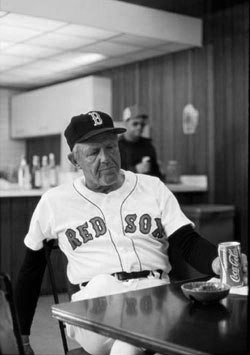
From New York, The Major went to Detroit, managing the Tigers through five marginal seasons from '74 to '78. He also skippered the Red Sox from 1981 to 1984 but had no division titles to show for his efforts in either stop. He became vice president of the Twins in 1986 and held that post in 1989, when he decided to retire for good.

Despite spending the end of his career with other organizations, Houk is best remembered as a Yankee. Although he wasn't a big part of it, the Yankees won six World Series in his eight years as a player. His managerial career started with the legendary summer of '61 and ended just before George Steinbrenner took over the team in 1973. He was a great solidier and baseball man who lived a long, proud life. Rest in peace, Major.

Thursday, June 17, 2010

Changes To Stadium Football Schedule

This homestand marks the first games at Yankee Stadium since the first non-baseball event at the park, the Miguel Cotto - Yuri Foreman fight on June 5th. While the boxing ring is long gone, the Stadium has a few souvenirs from the event, including noticeably worn patches of grass in center field, where the ring was located.

The Stadium will host another in-season, non-baseball event before 2010 is over, as Jay-Z and Eminem will perform the venue's first concert on September 13th. Following that, the next non-baseball event will occur on November 20th, when Army hosts Notre Dame in the first football game at the new Stadium.

Lost amongst all the potential conference realignment news that shook the foundation of college football last week were a couple notes relating to future football games at Yankee Stadium. First, last week Notre Dame quietly canceled their scheduled 2013 game against Army, which was penciled in as being a Yankee Stadium game. That cancellation may or may not be an indicator that the long-independent Fighting Irish were positioning themselves to finally join a conference in the event of a BCS superconference armageddon.

While one of the linked articles above speculates that Syracuse could replace Notre Dame at Yankee Stadium on Army's 2013 schedule, it's also possible that one of the principle movers and shakers in last week's conference realignments could be Army's opponent. Prior to leaving the Big XII to join the Pac-10 last week, Colorado made it clear that they wanted to play Army at Yankee Stadium. The Buffs' non-conference schedule had been booked through 2015, but with their move to the Pac-10 altering future schedules and with Army now having an open date in 2013, they may be able to get their wish sooner rather than later.

After hosting Notre Dame this fall, Army will host Rutgers at the Stadium in 2011, Air Force in 2012, and Boston College in 2014. In addition to the annual Army game, Yankee Stadium will also host the New Era Pinstripe Bowl for at least the next four years. The game will take place between Christmas and New Year's, and will match the third selection from the Big East against the sixth selection from the Big XII. No word yet as to how the Big XII's reduction to ten teams will impact the bowl's future. The inaugural game will take place on December 30th this year, with tickets already on sale.

Saturday, December 12, 2009

College Football Saturday: The Army-Navy Game


Good morning Fackers. Much to your chagrin, or more likely your delight, this will be our last College Football Saturday, as nearly everything wrapped up last weekend. So you'll be spared my attempt to come up with something insightful or witty for 15 or 20 games.

Instead, there's just one game on the docket this week, and it matters. Not just because it's the only game, but because it's one of the top annual sporting events, and for these two schools, it's the only game that matters: The Army-Navy Game.

The game doesn't have the same impact on the national college football picture that it did in generations past, but it still matters for historic value alone. Wisely, the game was pushed back a week this year, removing from the shadow cast by the BCS Conference Championship Games, and leaving it in the spotlight all on its own. It will be broadcast on CBS at 2:30.

Navy enters today with a decided advantage. Their record is two and a half games better than Army. They've won the last seven meetings, nine of the last ten, and ten of the last twelve. Still, anything can happen in these rivalry match ups. We know the players taking the field today represent the best and brightest of our nation, and the amount of pride on the line in this game nearly negates any talent advantage. Navy already has their bowl invite wrapped up; Army clinches a berth with a win today. Our friend Simon shows us how Army is better.

Today's game will be played at Lincoln Financial Field in Philadelphia. Future sites are booked through 2017, but the possibility remains that it may come to Yankee Stadium after that - if the Yankees are still foolishly trying to hold football games there.

My uncle is an Annapolis grad, and both he and my aunt served in the Navy, so I'll be firmly in the corner of the Midshipmen today. Go Navy, Beat Army!

Friday, July 24, 2009

The Forgotten Hall Of Famer

(Photo from NYT)

This weekend brings the annual Hall of Fame inductions from Cooperstown. The attention this year will assuredly be focused on Jim Rice and former Yankee Rickey Henderson, but another, lesser known, Yankee great will be enshrined with them.

Former Yankee second baseman
Joe Gordon was elected to the Hall by the Veterans Committee in December of last year, a full month before the BBWAA chose Rickey and Rice. Before there was Tom Gordon, before there was John Flaherty, Joe Gordon was "Flash", nicknamed after the popular comic book character and inspiration for the God-awful 1980 movie - Flash Gordon.

Gordon attended the University of Oregon, in the days before Phil Knight and Nike outfitted the Ducks with
abominable football uniforms. In addition to playing for the baseball team, Gordon also played football and track, and according to some sources, may also have participated in gynamstics, soccer, and/or played the violin.

Following his collegiate days, Gordon joined the Pacific Coast League, the closest thing to major league baseball on the West Coast in the years before the Dodgers and Giants left New York. He spent 1936 with the Oakland Oaks, the same franchise that would later send both manager Casey Stengel and fellow second baseman Billy Martin to the Bronx, hitting .300 but making 42 errors as a shortstop.

Undeterred, the Yankees brought Gordon East after the season and sent him to their top farm club, the Newark Bears. There, he was part of what's considered one of the greatest minor league teams of all time, where his teammates included other future Yankees Babe Dahlgren and Charlie "King Kong" Keller. Switched to second base, Gordon still made 47 errors, but also led International League second basemen in putouts, assists, and double plays. At the plate, he finished second in the International League in both home runs (26) and runs (103), while batting .280 and slugging .474. His play was enough to usurp future Hall of Famer Tony Lazzeri as the Yankee second baseman for 1938.

Joining a team that had won back-to-back World Series, Gordon became a key cog in a potent offensive line-up that featured Hall of Famers Lou Gehrig, Bill Dickey, and a young Joe DiMaggio, as well as potent bat in second year man Tommy Henrich, and a solid complimentary parts in George Selkirk, Red Rolfe, and Frank Crosetti. Gordon hit .255/.340/.502, posted an OPS+ of 108, slugged 25 HRs, and drove in 97. With a pitching staff anchored by Hall of Famers Lefty Gomez and Red Ruffing, the Yanks cruised to their third straight pennant by 9.5 games, and swept the Cubs in the World Series, where Gordon hit .400/.438/.733 with a HR and 6 RBI.

Gordon improved as a sophomore, with the Yankees again winning the Series. He upped his batting line to .284/.370/.506 (123 OPS+), was fifth in the AL with 28 HRs, drove in 111, and made his first All-Star team. He also led AL second basemen in chances, putouts, assists, and double plays.

The Yankees' run of World Series victories ended in 1940, but Gordon turned in another exemplary season of .281/.340/.511 (121 OPS+), with 30 HR, 103 RBI, 112 runs scored. He again led AL second baseman in chances and assists and was second in putouts and double plays. The Yanks won the Series again in '41, with Gordon having another fine season (117 OPS+) and getting his second top ten MVP finish in three years. He also spent part of the year playing first base.

In 1942, with the league weakened by America's entering World War II, Gordon turned in his finest season. He hit .322/.409/.491 (155 OPS+), with all but his SLG representing career highs. His HRs dropped to 18, but that was still good for sixth in the AL, was fifth in OBP, sixth in SLG, fourth in OPS, and made his fourth straight All-Star appearance, three of them starts over fellow Hall of Famers Charlie Gehringer and Bobby Doerr. His campaign earned Flash the AL MVP award, sandwiching him between DiMaggio and Spud Chandler as the second of three consecutive Yankees to win the award. The Yankees again went to the Series, but lost in five games to the Cardinals, with Gordon hitting going just 2 for 21 (.095).

The team rebounded in 1943, beating the Cardinals for the title, following another great season from Gordon. He had a 126 OPS+ and finished sixth in the AL in HR, marking the sixth time in six seasons Flash finished in the top ten. He also finished second in BB, seventh in runs, and made his fifth straight All-Star team.

Gordon lost the 1944 and '45 seasons to military service. Orginally stationed in New Mexico, he was shipped to San Francisio before being relocated to Hickam Field in Honolulu with the Seventh Army Air Force in the summer of 1944. When he wasn't performing his duties in the motor pool, Gordon played baseball for the 7th AAF, along with Yankee teamamte Joe DiMaggio. As Gordon later recalled, they weren't the only two ringers on the team: "We had Don Lang, Bob Dillinger, Walter Judnich, Dario Lodigiani, Mike McCormick and Red Ruffing on our club. At one point we had a streak of about 31 straight wins. I think we finished with about an .800 average".

Upon his return in 1946, Gordon suffered through the worst season of his career. Thinking he was finished at 31, the Yankees traded him to Cleveland after the season, getting
Allie Reynolds* in return.

*
Nicknamed "Superchief" due to his Native American heritage, Reynolds became the Yankees ace, as they won the World Series in 1947, and five straight from '49 through '53. Reynolds was often used out of the bullpen as well, brought in during the late innings as the afternoon shadows crept over homeplate, making his 100 MPH fastball more unhittable than usual. Hmmm.... a Yankee pitcher of Native American descent who could dominate in relief and be a front end starter as well. Where have I heard this before?

Back to Gordon. Much to Cleveland's delight Gordon was not yet done. He turned in OPS+ of 134 and 135 in 1947-48, the second and third best of his career, finishing second in HR both years and in the top ten in RBI, SLG, and OPS. He returned to World Series for the sixth and final time in 1948, and won his fifth career ring as the Indians took what remains their last World Championship.

Gordon played two more Big League seasons, turning in a league average performance both years, before returning to the PCL as a player-manager with Sacramento. At 36, he led the league in both HR and RBI. He hung up his spikes after one more season, but continued to be involved in baseball as both a scout and a PCL manager. In 1958 he returned to the Majors as the Indians manager. In the middle of the 1960, Cleveland traded him to Detroit for Tigers manager Jimmy Dykes (for those of you scoring at home the Tigers had a manager name Jimmy Dykes and later a player named Rusty Kuntz). Following the 1960 season he became the manager of the Kansas City A's, only to become the first in a long line of skippers fired by Charlie Finley. He finished his association with MLB by managing the Kansas City Royals in their innaugural season of 1969. He died in 1978 at the age of 63.

Much like Jim Rice, I'm not entirely sure that Gordon is a HoFer, but he certainly was a great player. After Flash hit .500/.667/.929 in the '41 Series, no less an authority than Yankee Hall of Fame manager Joe McCarthy called Gordon the greatest all-around player he'd ever seen. In his
New Historical Baseball Abstract, Bill James ranks Gordon as the 16th best second baseman of all time, between Hall of Famer Nellie Fox and fellow Yankee Willie Randolph. James ranks Gordon ahead of HoFers Bobby Doerr, Tony Lazerri, Johnny Evers, Red Schoendienst, and Bill Mazeroski, but behind underappreciated and unenshrined players such as Bobby Grich and Lou Whitaker. He still holds the AL record for career HRs by a second baseman, and held the single season record until Bret Boone, likely pharmaceutically enhanced, bested him in 2001 and was later passed by fellow Yankee Alfonso Soriano.

Worthy of induction or not, I'm happy to see Gordon get some long overdue recognition. More than sixty years after he last put on pinstripes, Gordon is all but forgotten by modern Yankee fans. He was a major component of five Yankee pennant winners and four World Series champions and a former MVP, but his career is overshadowed by teammates Joe DiMaggio and Bill Dickey. While those two were surefire HoFers and are remembered to this day in Monument Park, those Yankee teams wouldn't have been nearly as successful without the likes of Charlie Keller, Tommy Henrich, and of course Joe Gordon, all of whom have been undeservedly relegated to footnotes in Yankee history.

Thursday, July 23, 2009

“This is not just a stadium for baseball”

That's what Lonn Trost thinks of the New Yankee Stadium:
"This is not just a stadium for baseball," Yankees COO Lonn Trost said. "It's a stadium for college and university football."
To refresh, this is Lonn Trost, the man whose fingerprints are all over the New Stadium and who was more responsible than anyone else for designing it. Got it? Now take a look at this:

See how well the football field fits into the dimensions of the baseball configurat... wait, I'm sorry, what's that? It doesn't fit at all and the dugouts might have to be filled-in during these games just to accomodate the corners of the endzones? Just look at how the stands unnecessarily jut away from from the 50 yard lines! I like what you did there, Lonn. There's hardly a good seat in the house!

You'd think that if someone with Mr. Trost's "appreciation of the history" of the Old Yankee Stadium might have thought of this beforehand, if they truly had wanted to play college football games there. Perhaps the need popped up after the Yankees' revenue projections fell short for this year and they are taking steps to cover their behinds just in case the economic conditions don't improve.

But the fact remains that it IS a Stadium just for baseball, which explains what it was explicity fucking designed for it without taking any other events into consideration. You can try to shoehorn a football grid into it or put a stage for a concert in centerfield, but it's going to be completely awkward because baseball parks aren't meant for anything else. Just like football stadiums weren't meant to house baseball games. Again, historically, this was done out of necessity. Now it's being done out of nostalgia and greed and I'm not sure which of those is worse.

Tuesday, July 21, 2009

November 2010... FEEL THE EXCITEMENT!!!1!

If you watched last night's game from the beginning on YES, then you probably experienced the excruciating half inning sit-ins by Rich Ellerson and Charlie Weis. The head coaches of the Army and Notre Dame football teams were there to promote the meeting between the two powerhouses of modern college football in November 2010, verbally excrete as many cliches as possible and slowly lull anyone watching the broadcast to sleep before three outs were recorded.

I have mixed feelings about having football games played in the New Yankee Stadium to begin with. The reason that they played football there in the past was out of necessity, since there wasn't a football stadium in the area. However, now there most certainly is, and by the 2010 season, there's going to be a brand new one in the Meadowlands (where Notre Dame already has plans to play Navy that year). It's yet another example of Lon Trost & Co. making misguided, nostalgic attempts to celebrate the history of the Old Stadium. You can acknowledge the past with out reliving it, Lon. This is a brand new billion dollar baseball stadium, they can play football in the brand new billion dollar football stadium across the river.

These guest visits were another issue all together. It was little more than self-congratulatory back slapping for the Yankees and the YES Network and served no purpose to the fans who tuned in to, you know, watch a baseball game. Why distract from a sporting event that's actually unfolding right in front of our eyes? They did nothing but promote an event that isn't going to happen for 16 months and figures to be totally lopsided, unwatchably boring or both when it's finally played. Save the date, folks!

There was already a press conference about the football game. Isn't that enough? Let's be realistic, no one is making plans for the game yet. Yes, it raised the awareness. But we are going to be battered over the head with promotions for the next year and third and most people aren't going to decide until that day or possibly during that game if they are going to watch it.

Especially after the amount of innings spent ignoring the action on the field with visitors in the booth yesterday, you'd think that YES would have refrained from doing two more today. Instead we got to hear Ellerson talk about his team's practice schedule and Weis go on about how he always wanted to be a Yankee announcer in the most lifeless drone ever heard in a broadcast booth. I can't imagine why that didn't work out for you Charlie.

Enough with the guests. We just want to watch the game.

Friday, July 17, 2009

College Football Closer To Reality At New Stadium

Back in May, we ran a post about Notre Dame expressing interest in playing at Yankee Stadium. Today, that looks closer to being a reality.

According to the Times Herald-Record, Army and Notre Dame will play their 2010 game at the Stadium. The Black Knights will also reportedly play a game there in 2011, 2012, and 2013 against opponents yet to be determined.

I agree with ESPN's Graham Watson in thinking that having the annual Army-Navy game there would be great, but the locations for that game are already booked for years to come.

While I can appreciate the novelty and the nostalgia of hosting football at the new Stadium, I'm not sure it's the best idea in the world. The Yankees have invested billions of tax payer dollars in building a new baseball stadium. Why jeopardize the quality of the turf by subjecting it to a football game?

As Jay noted last week, multi-purpose ballparks are dying off. In recent years Veterans Stadium, Three Rivers Stadium, Riverfront Stadium, Candlestick Park and Qualcomm Park, all former two sport venues, have been replaced. The Metrodome will join them at season's end. Of the remaining dual sport MLB parks - Network Associates Coliseum and Landshark Stadium - are considered the worst venues in baseball. Why would the Yankees want to jump back to the multipsort mindset of 20 and 30 years ago?

Thursday, May 21, 2009

Stay Off of My Lawn!

[Disclaimer: I loathe Notre Dame in much the same way that Big Willie Style hates BC]

The original Yankee Stadium hosted many a football game in its history. The New York football Giants called it home from 1956 through the early part of the 1973 season, and it was the site of what's still remembered as the NFL's Greatest Game. Before the Giants, assorted second-rate pro football teams bearing the name "Yankees" also called the Stadium home.

College football was also played there. NYU hosted 96 games there and were even allowed in the good seats back then. Fordham played 19 games in their neighborhood park. It was the site of Knute Rockne's famous "Win One for the Gipper" speech, as Notre Dame and Army faced off there for 24 consecutive years.

Today comes the news that Notre Dame wishes to take the field in the New Stadium. That's right, the once proud Fighting Irish, led by fat Charlie Weiss and his reconstructed knee, want to play at the new ballpark for "history's sake". Or, maybe it's because the match-up would likely be against lowly Army, a virtually assured win for a program that appears to be increasing the cupcake portion of their schedule on an annual basis.

Another possibile opponent would be Connecticut. Last year the two schools reached an agreement on a six year series to begin in 2011. For the right to play ND, Connecticut had to agree to play its three "home" games out-of-state. The Meadowlands and Gillette Stadium are considered the likely destinations, but The Stadium could offer a compelling alternative.

I say no thanks ND. We got a nice little manicured lawn here and we don't need you messing it up. The only way I'd be interested in this is if it were a BC-ND game (of course). BC has won the last six Holy Wars, and coincidentally, the 2010 match-up is the last one scheduled for years to come. Given that it would have to be a BC home game though, and BC is represented by the evil Fenway Sports Group, I see no way that ever happens.