I've never been shy about dropping references to my alma mater here, whether it's been talking about the Beanpot, recapping their outdoor hockey game at Fenway, or making passing references to their football team all fall. I realize that, with the exception of Joe, it's of little to no interest to the vast majority of the Fackers, but I appreciate your humoring me, or at least ignoring it politely.
But today Fackers, today is a day where you all should rally behind Boston College. At 6:00, BC will play their annual exhibition game against the Red Sox. You may not care about BC, but I know that there's no love for the Sox in these parts.
The Eagles have little chance against the Sox. They've never beaten them, and about the best things got was three years ago when Johnny Ayers, who was also the punter on the football team, led off the game with a double off Daisuke Matsuzaka in his first Red Sox appearance.
But the BC baseball program has gained a higher profile in recent years. Catcher Tony Sanchez was the fourth overall pick in last year's draft; pitcher Mike Belfiore was a supplemental first round pick, and two other Eagles were selected in the later rounds. Last year's team qualified for the College World Series for the first time in forty two years and battled national power house Texas for seven hours and twenty five innings before losing the longest game in collegiate history. It's a long shot, but if Manatee Junior College could beat the Pirates last year, maybe there's hope for the Eagles tonight.
For the Sox, former Twin Boof Bonser gets the start after missing all of 2009 with a shoulder injury. I had hoped the Yankees would kick the tires on Bonser when the Twins DFA'd him in the offseason. Not because he's any good - he's not really - but because he sports the same nickname that's followed me for more than fifteen years. I briefly had visions of me getting a player t-shirt with my nickname on the back without looking like a total loser in the process, but it's just not in the cards. To make matters worse he's gone to the worst possible team. So that's it for you Boof: you're dead to me now.
Game starts at six and will air on NESN. To get your school spirit going for tonight here are the Dropkick Murphy's with the BC fight song.
Wednesday, March 3, 2010


"Making" Jeter A "Yankee For Life"®!1™!!1!©!
 Tired of the talk about Derek Jeter's upcoming contract negotiations? Well, you're in luck! Kevin Kernan has a mind-bendingly redundant and asinine column in this morning's Post that bypasses Jeter's current situation and orders the Yankees to somehow make him part owner of the team after his career is over (but offers no blueprint of how that might be accomplished).
 Why? Because, Jeter apparently needs to be a "Yankee for Life" and Kernan purports that making him an owner of the team is the only way to accomplish that.
Allow me to summarize the entirely (and inanity) of Kernan's article with four short, verbatim excepts of it:
- The Yankees need to find a way to make Derek Jeter a Yankee for Life. There's really only one way. At some point the Steinbrenner family would have to take him into the ownership group.
- The Yankees and Jeter will come together on a new deal at some point, but Jeter needs to be a Yankee for Life and there is a way to make him one. The Yankees need to work out a deal with Jeter where they allow him to become part of Yankees ownership after his playing days are complete.
- Jeter needs to be a Yankee for Life.
- Where will that ownership path take him? It should take him through The Bronx. Jeter should be a Yankee for Life.
Pop quiz, Kernan: How much of the team does Yogi Berra own? Yes, he played for and managed other teams, but does that diminish his legacy as a True Yankee 4EVAR®? Larry Bird is the President of Basketball Operations for the Pacers, do you think fans of the Celtics remember him any less fondly?
The Yankees don't need to "find a way to make Jeter a Yankee for life". The fact that Kernan is demanding that Jeter be magically granted an ownership stake in the team is a testament to the status he holds in the franchise regardless of whether they cut him in to it financially or not. Nothing needs to be done to make Jeter a lifelong Yankee except maybe give him another contract and invite him back to Old Timer's Day when it expires.
One thing is certain, Derek Jeter attains his goals. So you can be sure he will be an MLB owner somewhere.
Another thing that is certain? That is fucking ridiculous.
What if Derek Jeter's goal is to build a baseball stadium on the Moon and play his team's games there? Well, the rest is just a formality, right Kevin? THE WILL OF DEREK JETER CAN NEVER BE DENIED!
Jeter will be a championship owner just as he is a championship player.The formula worked perfectly for Michael Jordan.
Craig walked through the logistics of making Jeter a part owner earlier this morning and there might be some potential for that. But Jeter has expressed interest in "calling the shots" and pooling together every dime he has made and then some isn't going to buy him any real authority in the Yanks organization. Making him a token, honorary sort of owner of the team is a fine idea, but the notion that any stake he is given will make him "Boss II" as Kernan says is patently ridiculous.
If Jeter wants to have actual control over a team (and doesn't want to be a GM), he's going to have to find a bunch of extremely wealthy investors who will hand him tons of money without asking for a say in how the team is run, target another franchise besides the Yanks or both.
Let The (Spring Training) Games Begin
 Good morning, Fackers. Today we take the next baby step along the path to actual, meaningful baseball. After two full weeks in camp for most pitchers and one week for the majority of the position players, the team is now ready to play some live baseball against a real opponent. Well, real might be stretching it considering that said opponent is the Pirates, but you know what I'm trying to get at here.
Of course, the action today is going to be significantly different than a regular season game. In addition to the fact that pitchers are scheduled to pitch in predetermined blocks of a few innings, they won't be throwing a their full array of pitches - most notably their breaking stuff. The lineups are bound to have a few players that aren't going to be on the roster come Opening Day, and that number will steadily increase as the game wears on. It's an just exhibition or scrimmage or dress rehearsal, but after a long winter with very little in the way of live baseball action, it's a welcome reprieve to see your guys on the field.
Last night, Joe from River Ave. Blues cautioned us not to pay attention to the stats from Spring Training but simultaneously reminded us to enjoy the games for what they are:
I encourage everyone to watch spring training baseball for the pure enjoyment of the game. I do not, however, encourage anyone to draw insights from what they see in these games. The pitchers and hitters are still working back into their grooves. A.J. Burnett, for example, will not throw his curveball in his first few spring starts. I’m sure the hitters will all be focusing on what they’ve worked on with Kevin Long and figuring out what works. How can we judge these players if they’re not playing the same way they will when the season starts?Similarly, our buddy Craig isn't going to bother with his hilariously-titled morning round up, And That Happened until the regular season rolls around:
Yes, it's baseball, but it's a decidedly different beast than the game we know and love. Things happen in spring training like, say, a team benching all of its regulars at the last minute because it rained three hours earlier. Veterans don't make road trips very often and play golf while their teammates sweat. Pitchers go two or three innings max until at least the end of the month. What happens in those games may be interesting, but the games as a whole are not meaningful. They're certainly not the sort of thing that makes a guy want to dig down and analyze the heck out of a box score, ya know?By the time Opening Day arrives, we are going to be sick of watching Spring Training games. We'll be able to hear the regular season knocking on the door and will be more than willing to leave the meaningless scrimmages and drills of Florida in the dust. However, today around 1:00 will be a great time to embrace the sights and sounds of the game without having to care too much about what happens on the field.
Note: Our friends over at Bronx Baseball Daily are hosting a live chat for the game, and it should be a good chance to yak it up with some like-minded folk. Stop on by.
Tuesday, March 2, 2010
Ring, Brackman, Burnett Take Home Gold
The final results have been tallied, the medals have been awarded, and the national anthems have been played. The 2010 Yankee Arcade Olympics have concluded. Here are the results, courtesy of Chad Jennings. Please note that no bronze medals were awarded as part of Hal Steinbrenner's budgetary constraint efforts.
Last year's billiard champion, Mariano Rivera, failed to medal, proving the he is in fact human. Of course, at 40 years old he likely grew up with primitive gaming systems like ColecoVision and Commodore 64, so he was working with a handicap today.
That's it for today Fackers. Jennings has pictures here and here. We'll be back tomorrow with real live baseball. Amen to that. We started the day with The Boss and we ended it talking about an arcade. I suppose I have to embed this now:
Pop-a-Shot BasketballCongratulations guys, these are the only competitions you're likely to win this spring as the Yankee bullpen crunch has you both on the outside looking in. I had pegged the side arming Ring as a the Skee Ball favorite earlier today. No words as to whether that throwing motion translated to Pop-a-Shot and saw him shooting free throws Rick Barry style. Former collegiate basketball players Andrew Brackman and Randy Winn did not place.
Gold: Royce Ring
Silver: Mark Melancon
Skee Ball:Brackman was a heavy favorite in basketball, but managed to medal in Skee Ball. The guy is like the Bo Jackson of arcade games. And since he had the accuracy to win the Skee Ball tournament, we can all expect great improvements upon his 26 wild pitches, 10 HBP, and 6.4 BB/9 from last year. Nunez made 33 errors at Trenton last year and rated at minus fifteen runs per 150 according to Total Zone, so he has experience in bouncing his throws to a target.
Gold: Andrew Brackman
Silver: Eduardo Nunez
IndyCar Racing:I figured Burnett as more of a NASCAR guy, but racing is racing I suppose. Dana Cavalea is the Yankees Strength and Conditioning coach.
Gold: A.J. Burnett
Silver: Dana Cavalea
Last year's billiard champion, Mariano Rivera, failed to medal, proving the he is in fact human. Of course, at 40 years old he likely grew up with primitive gaming systems like ColecoVision and Commodore 64, so he was working with a handicap today.
That's it for today Fackers. Jennings has pictures here and here. We'll be back tomorrow with real live baseball. Amen to that. We started the day with The Boss and we ended it talking about an arcade. I suppose I have to embed this now:
Keep On Trucks-ing
As Alex Belth pointed out this morning, you can feel baseball getting closer. The air is starting to smell like spring just a little bit. I don't need to turn on my headlights on my drive home from work at the end of the day. Daylight Savings Time begins twelve days from now; the Spring Equinox comes six days later. Spring Training games start tomorrow.
Elsewhere in the world, the other rites of spring are taking place. The NHL trade deadline is tomorrow. NCAA Conference Tournaments begin over the next week and March Madness will soon follow.
For me, another rite of spring is the Allman Brothers Band's annual NYC residency. As we detailed last June, the ABB is vacating the Beacon Theater this year and heading waaaaay uptown to the United Palace Theatre for thirteen shows beginning March 11th.
 Derek Trucks will be part of it, as he has been since joining the band at twenty years old following the 1999 Beacon run. We've talked about Derek quite often here, including detailing his family ties to former Tigers, Browns, White Sox, and A's pitcher, as well as the oldest living former Yankee, Virgil Trucks.
At MLB.com Saturday, Peter Gammons took an extended look at Virgil's career, in a great column that details how Derek's baseball fandom spurred him to seek out the relative he had never met:
That notwithstanding, it's a great column. Head over and give it read. Just be sure to ignore the part about how the family of Derek's wife Susan Tedeschi are long-time Red Sox season ticket holders, or how they're taking their eight year old son to Red Sox camp this week. Hey - nobody's perfect.
 As Jay detailed after we attended the Derek Trucks Band's concert at The Egg in December, the dTb is now on an extended hiatus. Derek and Susan are forming a new band, which at present appears to feature a rotating cast of musicians. They have dates scheduled through the spring and into summer, including stops as part of outstanding line ups at the Wanee Music Festival in Florida and the Mountain Jam in Hunter, NY.
Elsewhere in the world, the other rites of spring are taking place. The NHL trade deadline is tomorrow. NCAA Conference Tournaments begin over the next week and March Madness will soon follow.
For me, another rite of spring is the Allman Brothers Band's annual NYC residency. As we detailed last June, the ABB is vacating the Beacon Theater this year and heading waaaaay uptown to the United Palace Theatre for thirteen shows beginning March 11th.
 Derek Trucks will be part of it, as he has been since joining the band at twenty years old following the 1999 Beacon run. We've talked about Derek quite often here, including detailing his family ties to former Tigers, Browns, White Sox, and A's pitcher, as well as the oldest living former Yankee, Virgil Trucks.
At MLB.com Saturday, Peter Gammons took an extended look at Virgil's career, in a great column that details how Derek's baseball fandom spurred him to seek out the relative he had never met:
Virgil Trucks had just turned 91 two years ago when this boyish kid who looked as if he were 20 showed up at his door. The kid introduced himself as Derek Trucks, Virgil's nephew's son, and they spent the day tying together the frayed generations of Trucks, of baseball stories Derek loved hearing, and music that Virgil says he didn't fully understand.For the Gammons haters out there - and you know I'm not one of them - you can take solace in the fact that Peter incorrectly claims Derek is Virgil's great-nephew. As we posted here in December, with thanks to Derek's cousin Vaylor, Virgil is the first cousin of Derek's grandfather, making them third cousins twice removed. That's the type of hard-hitting analysis you Fackers get here, something a Ford Frick Award winner can't bring you.
For years, Derek had Virgil "Fire" Trucks' baseball card on the back of his guitar, with the Allman Brothers or The Derek Trucks Band, with his wife Susan Tedeschi, playing lead on the Eric Clapton tour, backing Buddy Guy. That he told Virgil, and that Derek's uncle Butch, who has been the Allman's drummer since they formed in 1969, has often had another baseball card on his drums. "I haven't listened to the Allman Brothers too much," says Virgil. "They don't play them much on the Birmingham station."
When Virgil was told that Derek has a 1952 Tiger uniform with Virgil's 23 hanging in a trophy case, he said, "maybe I should start listening to the Allmans a little more."
That notwithstanding, it's a great column. Head over and give it read. Just be sure to ignore the part about how the family of Derek's wife Susan Tedeschi are long-time Red Sox season ticket holders, or how they're taking their eight year old son to Red Sox camp this week. Hey - nobody's perfect.
 As Jay detailed after we attended the Derek Trucks Band's concert at The Egg in December, the dTb is now on an extended hiatus. Derek and Susan are forming a new band, which at present appears to feature a rotating cast of musicians. They have dates scheduled through the spring and into summer, including stops as part of outstanding line ups at the Wanee Music Festival in Florida and the Mountain Jam in Hunter, NY.
Super Nintendo, Sega Genesis
An Arcade Tournament, a dark horse candidate that we didn't even handicap this morning, wins the day. Chad Jennings has the details. The team will participate in three events: skee ball, pop-a-shot basketball, and an Indy racing game.
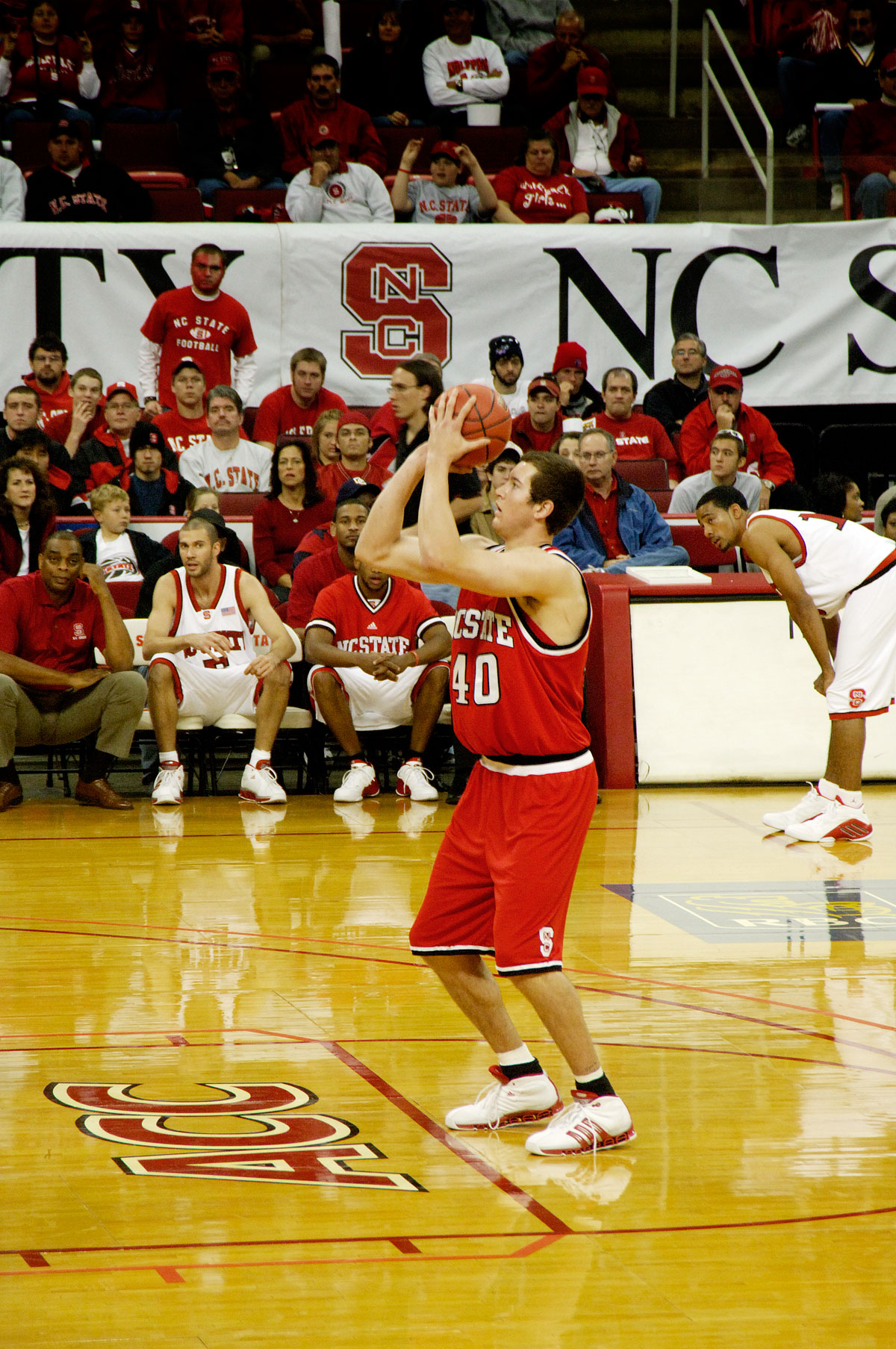
 Former NC State basketball player Andrew Brackman is the odds-on favorite for pop-a-shot. But the big fellas rarely do well from the charity stripe, so we may see a surpise contender emerge.
 Side-arming lefty Royce Ring presumably would have the advantage in skee ball, but given Mo's control it wouldn't surprise me if he bullseyed every toss.
 Jesus Montero's father is a mechanic, and Jesus dabbles in engine building, so I would imagine he has the inside track for Indy racing. I just hope A-Rod has learned his lesson and doesn't try to text while he's racing.
 Poor Joba is stuck home with flu like symptoms, but he'll likely have some good games there to keep himself entertained.
 Former NC State basketball player Andrew Brackman is the odds-on favorite for pop-a-shot. But the big fellas rarely do well from the charity stripe, so we may see a surpise contender emerge.
 Side-arming lefty Royce Ring presumably would have the advantage in skee ball, but given Mo's control it wouldn't surprise me if he bullseyed every toss.
 Jesus Montero's father is a mechanic, and Jesus dabbles in engine building, so I would imagine he has the inside track for Indy racing. I just hope A-Rod has learned his lesson and doesn't try to text while he's racing.
 Poor Joba is stuck home with flu like symptoms, but he'll likely have some good games there to keep himself entertained.
Keeping Score On The Lake

As the Yankees try to recapture the magic of their team-building outing last year, Joe Girardi doesn't have many activities to choose from if he wants to go a different route than a pool tournament. Finding something that sixty guys could compete in that doesn't involve significant injury risk is no easy task. As Matt conveyed before, that narrows it down to stuff like lawn games, shuffle board and laser tag. What else? Go-karts? Golf? Curling? Darts? A poker tournament? Fishing...?
It wasn't an official outing, but last year during Spring Training A.J. Burnett took a few teammates fishing with him in his boat. Having played in Florida for six years before leaving for Toronto and been an avid fisherman, it would be safe to assume that Burnett knows a couple of decent spots. If David Robertson were in change, that's what he'd do.
Joe Girardi probably wouldn't pick angling as the team's activity due to the cost, liability and logistics of it all, but if he did, they'd have a good way to keep score. Dale Bowman of the Chicago Sun-Times recently proposed some simple sabermetric-style stats that could be used for fishing (h/t BBTF):
Joe Girardi probably wouldn't pick angling as the team's activity due to the cost, liability and logistics of it all, but if he did, they'd have a good way to keep score. Dale Bowman of the Chicago Sun-Times recently proposed some simple sabermetric-style stats that could be used for fishing (h/t BBTF):
Think of fishing by the numbers in the tradition of the 1977 Baseball Abstract, Bill James' 68-page spark to the sabermetrics revolution in baseball.Bowman goes on to explain some intuitive metrics that place the weight of the catch and money earned in the context of the tournament they were recorded in. Not all competitions would benefit from increased statistical analysis, but pro fishing seems like it would be one of them. Tournaments held in different areas and under varying conditions can yield drastically different overall catches, similar to how certain eras in baseball have been characterized by higher or lower run scoring environments.
A similar method should work to compare performances of competitive fishermen.
Numbers are the measuring stick of baseball across time. James just took it past the basics of wins and losses, strikeouts, batting average, ERA and homers.
We already have the basic statistics of fishing (equivalent of average, ERA) with tournament victories, career earnings and Classic titles. But we can dig deeper to compare fishermen.
Analyzing the fisherman's results would be useful, but even more interesting would be the data on the fish. If there was a way to easily capture basic info about the circumstances a fish was caught under, a big enough sample might yield some interesting trends. Things like the depth of the strike, water and air temperature, type and color of lure, amount of sunlight, barometric pressure, time of year, etc., would lend valuable insight into fish behavior. Having that data available would close the gap between those who have been figuring things out via trial and error over long periods of time and those who have much less experience. That would be bad news for fish, but good for the casual fisherman.
Of course, this is impractical for a few reasons. First, you'd need a universal form to record the data and distributing them would be tough. Secondly, pro fisherman are notoriously reluctant to give away their tactics, lest they tip off their opponents and lose their competitive advantage. Consequently, you'd have to enlist average anglers to gather data, most of whom probably don't want (or are too drunk) to waste their time writing a bunch of numbers after they flip a largemouth bass or rainbow trout over the side of their boat or onto the bank.
However, while it wouldn't be practical on a wide level, perhaps individual fishing guides could distinguish themselves by diligently recording results and analyzing them over a long period of time. It's possible, but I think that fishing is probably stuck in a place where baseball was for a long time, where common knowledge, conventional wisdom, intuition and superstition go relatively unchallenged as the main sources of strategy.
Field Trip Day At Yankee Camp
Good morning Fackers. Today marks another milestone as we move closer to real live baseball, as it's the final day before Spring Training games begin. The Yankees will not spend the day doing pitcher's fielding practice, throwing bullpens, and taking BP. Instead, trying to recapture the success of last spring's team building exercise, the team will play hooky today and take a little field trip for some sort of mystery competition.
Last year it was a pool tournament, so I doubt they'll repeat that this year. Reports from earlier in the spring ruled out bowling and paintball as too much of an injury risk. So what does that leave? Shuffleboard? Bocce? Laser tag? Mini golf? Ping pong? What do you think Fackers? Leave your ideas in the comments.
I can't take credit for the idea below, as Peter Abraham ran with this last year upon the recommendation of Connie Schwab in the Yankees' media department. I don't think they'll end up in a pool hall again today, but the general idea still applies. And far be it from me to pass up an opportunity to embed a Springsteen video.
Last year it was a pool tournament, so I doubt they'll repeat that this year. Reports from earlier in the spring ruled out bowling and paintball as too much of an injury risk. So what does that leave? Shuffleboard? Bocce? Laser tag? Mini golf? Ping pong? What do you think Fackers? Leave your ideas in the comments.
I can't take credit for the idea below, as Peter Abraham ran with this last year upon the recommendation of Connie Schwab in the Yankees' media department. I don't think they'll end up in a pool hall again today, but the general idea still applies. And far be it from me to pass up an opportunity to embed a Springsteen video.
We're gonna play some pool, skip some school, act real cool
Stay out all night, it's gonna feel all right
Monday, March 1, 2010
If Omar Minaya Is Pryzbylewski...
 Over at Baseball Analysts, they are doing a feature called Stakeholders wherein they interview someone affiliated with each Major League team and preview the upcoming season. Yesterday, Jeremy Greenhouse interviewed Pat Andriola from The Hardball Times about the Mets and led off with an awesome question. (Fair warning: If you haven't watched The Wire, you're probably not going to get much out of this post):
Jeremy Greenhouse: If Omar Minaya were a character from The Wire, who would he be?Like the question, Pat's response is excellent, too. If you were feeling less charitable, you might pick Herc as Minaya's analog, but that might imply that he only got promoted to GM because caught Jeff Wilpon getting a blowjob on his desk.
Pat Andriola: I need a minute to think about this...You know who I think it is, it’s Pryzbylewski. Prezbo is clearly a guy, like Omar as a GM, who is thrown into a certain situation. Prezbo was in the police department where everything lines up for him to be there, but maybe it’s not the best situation for him. Like Prezbo was better off at school, maybe Minaya should be on the sidelines as a scout—head of scouting—because he gets a deer in the headlights look as GM. He makes some silly signings, like Prezbo shoots a cop accidentally. I think that’s it. That’s my on the spot answer.
Prez isn't a bad guy, but he clearly made some mistakes during his time as a cop. And some of those mistakes might have cost him much more dearly if he wasn't the son-in-law of Major Valcheck. Similarly, if Minaya was working for someone other than the Wilpons, he probably would have been sacked after the Luis Castillo deal (accidentally discharging his gun in the office) or re-singing Oliver Perez (beating up the kid who was leaning on the squad car in front of the high rises). Perhaps the part where he accidentally shoots a fellow cop is yet to come.

To continue this analogy a bit further, I think Brian Cashman's closest comparable in The Wire is Stringer Bell. Both are quiet and calculating and second in the chain of command - Cashman reports to the Steinbrenners and Stringer to Avon Barksdale. All Cashman is concerned about is winning and all Stringer cares about is making money, while their employers have different concerns (the Steinbrenners want to be profitable and Barksdale is obsessed with his name and reputation). Both are a few steps removed from where the rubber meets the road but still have a deep understanding of The Game. Each has a rabid customer base in fantastic market and runs the operation like a streamlined business even though their industry is filled with firms that don't.
For those who made it this far without having seen The Wire, or those in the process of re-watching it, check out the fantastic reviews that Alan Sepinwall wrote on his blog for seasons 1, 2, 4 & 5. I discovered Alan's work during my first time through Season 4 and reading his synopses increased my enjoyment and understanding of the series exponentially. I've since started from the beginning and am working my way through, checking his summaries after every episode. Highly recommended.
If you've got any clever baseball-to-The Wire analogies, feel free to drop them in the comments.
Divisional Realignment Is Not The Answer

As you've likely noticed, even though Spring Training is in full swing, there still isn't an awful lot to talk about just yet. Traditional media always has the "best-shape-of-his-life" or new pitch story lines to fall back on. We've resorted to filling space by making fun of Kevin Youkilis, writing about hockey, or just not writing much at all.
The indefatigable Ken Rosenthal of FOX Sports filled his column inches last week with a radical divisional realignment proposal. Beyond the fact that involves Rosenthal, realignment talk is something that gets under my skin. I realize that it's extremely difficult for teams like Baltimore and Toronto to share a division with the Yankees, Red Sox, and Rays, and play nearly sixty games a year against those three teams thanks to the unbalanced schedule. But rather than making reactionary realignment proposals that would be rendered moot when the balance of power inevitably shifts, there are more fundamental changes that baseball could undertake to level the playing field.
Consider that all else being equal, a team in the AL West has a one in four chance of winning the division, plus a one in fourteen chance of earning the Wild Card spot, for an overall 32.1% chance of reaching the playoffs. Meanwhile, a team in the NL Central has just a one in six chance of winning the division, plus a one in sixteen chance of earning the Wild Card spot, for an overall 22.9% chance of making the playoffs. Sure, the Pirates have been an extremely poorly run franchise for nearly twenty years. But compared to a club in the AL West, they have a nine percent handicap before the first pitch of the season is even thrown.
 Beyond the disparity in league and division sizes, certain teams are also at a disadvantage when it comes to the gimmick of interleague play. Given the haphazard rotation of interleague matchups on a yearly basis, some teams luck into a cupcake schedule, while others have a more difficult row to hoe. Additionally, the designation of interleague rivals mean teams get an additional series against a predetermined opponent, usually geography based, regardless of the quality of that opponent. Yet all these things count equally in determining division and Wild Card winners.
The Wild Card presents another problem. All teams in a given league compete for a single Wild Card spot, yet all teams do not play equitable schedules. Aside from the inequities of interleague play, the unbalanced schedule makes it tougher for the second place team in say the AL East to win the Wild Card than it is for the second place team in the AL Central.
Lastly, the fact that division winners are guaranteed playoff spots creates the potential that more deserving teams miss the post-season. Last year, San Francisco, Texas, Florida, and Atlanta finished the regular season with records better than or equal to the Twins and Tigers. While the latter two clubs battled it out in an exciting play in game for the AL Central title, the other four clubs were off making tee times. Similar scenarios have the potential to play out every year. Before the '94 strike, the Rangers were on pace to take the AL West with a sub .500 record.
When divisional play was instituted in 1969, it made sense. Over the course of that decade, both leagues had expanded from eight to twelve teams. The fifty percent increase in size made another post-season berth worthwhile, and splitting the leagues into divisions was a natural way to identify two division champions as the post-season worthy teams. But moving to four playoff spots starting in '94 actually made the divisional system obsolete. Making those divisions unbalanced and awarding a playoff spot to a second place team was a less than ideal way of going about things. As laid out above, there are several systemic disadvantages to that system.
 Baseball should do away with divisions. They should do away with interleague play. They should do away with the unbalanced schedule. Go back to the pre-1969 format. No divisions, just two leagues. The top four teams in each league make the playoffs. The top seed plays the number four seed in the first round, no more stupid rules that the Wild Card team can't play a divisional opponent in the Division Series. Having the best record in the league should have a reward, and it should be the path of least resistance to the World Series. Changes like that would do far more to increase competitive balance than changing around the divisions every time the balance of power changes.
The indefatigable Ken Rosenthal of FOX Sports filled his column inches last week with a radical divisional realignment proposal. Beyond the fact that involves Rosenthal, realignment talk is something that gets under my skin. I realize that it's extremely difficult for teams like Baltimore and Toronto to share a division with the Yankees, Red Sox, and Rays, and play nearly sixty games a year against those three teams thanks to the unbalanced schedule. But rather than making reactionary realignment proposals that would be rendered moot when the balance of power inevitably shifts, there are more fundamental changes that baseball could undertake to level the playing field.
Consider that all else being equal, a team in the AL West has a one in four chance of winning the division, plus a one in fourteen chance of earning the Wild Card spot, for an overall 32.1% chance of reaching the playoffs. Meanwhile, a team in the NL Central has just a one in six chance of winning the division, plus a one in sixteen chance of earning the Wild Card spot, for an overall 22.9% chance of making the playoffs. Sure, the Pirates have been an extremely poorly run franchise for nearly twenty years. But compared to a club in the AL West, they have a nine percent handicap before the first pitch of the season is even thrown.
Beyond the disparity in league and division sizes, certain teams are also at a disadvantage when it comes to the gimmick of interleague play. Given the haphazard rotation of interleague matchups on a yearly basis, some teams luck into a cupcake schedule, while others have a more difficult row to hoe. Additionally, the designation of interleague rivals mean teams get an additional series against a predetermined opponent, usually geography based, regardless of the quality of that opponent. Yet all these things count equally in determining division and Wild Card winners.The Wild Card presents another problem. All teams in a given league compete for a single Wild Card spot, yet all teams do not play equitable schedules. Aside from the inequities of interleague play, the unbalanced schedule makes it tougher for the second place team in say the AL East to win the Wild Card than it is for the second place team in the AL Central.
Lastly, the fact that division winners are guaranteed playoff spots creates the potential that more deserving teams miss the post-season. Last year, San Francisco, Texas, Florida, and Atlanta finished the regular season with records better than or equal to the Twins and Tigers. While the latter two clubs battled it out in an exciting play in game for the AL Central title, the other four clubs were off making tee times. Similar scenarios have the potential to play out every year. Before the '94 strike, the Rangers were on pace to take the AL West with a sub .500 record.
When divisional play was instituted in 1969, it made sense. Over the course of that decade, both leagues had expanded from eight to twelve teams. The fifty percent increase in size made another post-season berth worthwhile, and splitting the leagues into divisions was a natural way to identify two division champions as the post-season worthy teams. But moving to four playoff spots starting in '94 actually made the divisional system obsolete. Making those divisions unbalanced and awarding a playoff spot to a second place team was a less than ideal way of going about things. As laid out above, there are several systemic disadvantages to that system.
Baseball should do away with divisions. They should do away with interleague play. They should do away with the unbalanced schedule. Go back to the pre-1969 format. No divisions, just two leagues. The top four teams in each league make the playoffs. The top seed plays the number four seed in the first round, no more stupid rules that the Wild Card team can't play a divisional opponent in the Division Series. Having the best record in the league should have a reward, and it should be the path of least resistance to the World Series. Changes like that would do far more to increase competitive balance than changing around the divisions every time the balance of power changes.An Ode To Edwar

At 6' 3" and 150 lbs, sporting Rec Specs and a change-up that's really more like a screwball, Edwar Ramirez always seemed as if he were created by a video game. His lanky frame and his signature pitch are similarly farfetched. Joe Torre compared his physique to that of a thermometer when he first came up and his change has been referred to as a "Bugs Bunny" pitch because it looked like batters could swing at it and miss a few times before it got to the plate.
That change-up really is a thing of beauty, rolling out of his hand a little under 80mph, just about 10mph slower than his riding 2-seam fastball and floating down and in to right handed hitters. It's all but unhittable if the batter has to protect against a legitimate fastball, but the problem is that if they are paying attention, they really don't have to. He threw the change so much that it caused a bench-clearing brawl in Double-A. He had to pare that down to 37% when he got to the Majors, but it doesn't take much game theory to figure out that 1/3 of the time is too often to throw a sweeping, 79mph pitch whose real value is in it's deception.
Mistakes on off-speed pitches are particularly deadly. Unfortunately for Edwar and the Yanks, Major League scouts and players keyed in on his reliance on that pitch, which led to the inflated home run rates that ultimately made him expendable to the Yankees, hence the ejection from the 40 man to make room for Chan Ho Park.
Rob Neyer doesn't expect Edwar to pass through waivers and end up back in Scranton and even if he does, Joe From River Ave. Blues doesn't think that he'll make it back to the Bronx again. It would be great if no team claims him in the next 8 days and he finds a way to improve his fastball and/or slider and defies the odds. But if not, he'll still be one of those interesting and memorable minor characters in recent Yankee history.
The Angels signed Ramirez in 2001 and he racked up a 4.66 ERA in 56 innings of Rookie Ball. Granted, that was in the run-friendly Pioneer League, but it wasn't a very good start to his professional career. He made it to High-A next season but struggled once he got there and was released by the Halos. Out of a job and unwilling to give up on baseball, he kept working on his craft with a friend at a field near his home in Miami. That's where he first experimented with the grip for his signature change up.
The Angels signed Ramirez in 2001 and he racked up a 4.66 ERA in 56 innings of Rookie Ball. Granted, that was in the run-friendly Pioneer League, but it wasn't a very good start to his professional career. He made it to High-A next season but struggled once he got there and was released by the Halos. Out of a job and unwilling to give up on baseball, he kept working on his craft with a friend at a field near his home in Miami. That's where he first experimented with the grip for his signature change up.
It took him a while to harness it - the Angels cut him again after Spring Training in 2006 - but he eventually caught on with Pensacola Pelicans of the Central Independent League. After striking out 93 batters in 56 innings and compiling an ERA of 1.12, he moved up to the Edinburgh Coyotes of the United League in 2007. He struck out 46 more in 25 frames as their closer before the Yankees finally scooped him up.
His ascent through the Yanks system was similarly meteoric. He pitched only 86 1/3 innings and just 40 in AAA before getting called up to the Big Leagues. He stuck out over 15 batters per 9 innings during that time, had an ERA under 1.00 and won the MiLB Minor League Reliever of the Award in '07. He struck out the side in his Major League debut and whiffed 13 per 9 IP for the remainder of the season but was saddled with a 8.14 ERA primarily because he allowed 6 home runs in 31 innings.
He was actually pretty effective in 2008, throwing 55 innings of 3.90 ERA and cutting his HR and walk rates in half from the previous season. However, in 2009, he returned to '07 form, walking too many, giving up too many hits and too many long balls.
Edwar was essentially the inverse of Shelly Duncan. Edwar was the quiet, skinny guy with glasses while Shelley was the outgoing, powerfully-built ox. Both made their Major League debuts in '07 and were let go this offseason. Both were more or less one trick ponies, Edwar with the devastating change up and the gaudy strike out totals and Shelly with the huge, looping swing and home run power. While those are the best tricks you can perform as a pitcher and hitter respectively, when they were exposed to Major League competition, Edwar's tragic flaw was his HR rate and Duncan was victimized by the K. But both guys were the sort of indelible characters that will be remembered more vividly than their contributions on the field would warrant. Best of luck to you, Edwar.
USA Loses, Hockey Wins
 Good morning Fackers. Well that was one hell of a heartbreaking loss yesterday no? Team USA looked like destiny's darlings when they tied it up with just 24 seconds to go, but Sidney Crosby's goal in OT gave the gold to the Canadians. Congratulations to Canada. They had an incredibly deep team and were under a tremendous amount of pressure to take gold on their home soil. Even in the disappointment of defeat, it was quite something to hear the entire arena sing O Canada as the Maple Leaf was raised over Canada Hockey Place.
As for the U.S., as tough as it is to come so close and take home silver, they should be very proud of what they did. Coming into the tournament they were considered a long shot to even reach the gold medal game. Instead, they rolled along and never even trailed at any point until Canada took a 1-0 lead yesterday afternoon. They were the youngest squad in the tournament, and it looks like this new batch of players will be worthy heirs to the Leetch-Richter-Chelios-Modano-Tkachuk-LeClair-Hull-et. al. group that set the bar so high through the 1996 World Cup and 2002 Olympics. That is of course unless the NHL pulls the plug on player participation in 2014 Games.
Even in defeat, Team USA earned honors. Goalie Ryan Miller was named Tournament MVP; Brian Rafalski earned top defenseman honors, and forward Zach Parise joined them on the all-tournament team.
Beyond that, we were treated to an outstanding two weeks of hockey that I hope will have impact that lasts beyond the heightened interest of the past several days. For all those who have made comments to the effect of "now I can stop caring about hockey for another four years", please realize that what we've witnessed over the past two weeks is not unique to the Olympics. The level of intensity shown throughout the Olympics is no different that what's on display for two full months each year during the NHL playoffs. The advent of widescreen televisions and HDTV has made hockey on television better than ever but it's no comparison to hockey in person. For my money, no sport is so markedly better in person than on TV than hockey. Do yourselves a favor and find out for yourselves.
And with that, I'll stop talking about hockey again and we'll get back to baseball. Spring Training games start Wednesday. Soon we'll have something resembling real baseball to talk about.
Photo credit: USA Today
Sunday, February 28, 2010
Going For The Gold

The outstanding Men's Ice Hockey tournament will wrap up this afternoon with the Gold Medal Game between the U.S. and Canada. These two squads met last Sunday, with the U.S. taking a 5-3 victory to finish group play undefeated.
Since then, the U.S. beat Switzerland in the quarterfinals Wednesday and trounced Finland in the semis on Friday, scoring six goals in the game's first fourteen minutes. Team USA continues to get superb goaltending from Ryan Miller, who bettered Switzerland's Jonas Hiller and Finland's Mikka Kiprusoff, the only other goalies in the tournament who have come close to Miller's level of play.
As for the Canadians, their loss to the U.S. and the point lost via a shootout victory over the Swiss in group play left them with the sixth seed. With Roberto Luongo replacing Martin Brodeur between the pipes, they beat up on Germany 8-2 on Tuesday, and then faced Russia on Wednesday. What many predicted to be the eventual Gold Medal Game entering the tournament was reduced to a quarterfinal game, and the expected heavyweight match between the two deepest teams in the tournament was a laugher, with Canada winning 7-3. In the semis on Friday, Canada jumped out to an early 2-0 lead over Slovakia, then withstood a late rally to take a 3-2 victory.
Last week's match up came one day short of the thirtieth anniversary of the Miracle on Ice; today's game comes on the fiftieth anniversary of the U.S. winning gold at the 1960 Games. This is also a rematch of the 2002 Gold Medal Game, when the Canadians took gold on American soil. The U.S. looks to return the favor today.
It's tough enough to defeat a team like Canada once in this tournament, let alone twice. It's even tougher to do it when the gold medal is on the line and the entirety of the arena is behind the Canadians. But this U.S. team is talented, has had an outstanding run through this tournament, and has the best player at the most important position. That'll go a long way towards evening the odds, and anything can happen in a single game. Puck drops at 3:15 EST. Let's go USA!
Subscribe to:
Posts (Atom)

 Posts
Posts